Recent Post
- 2026-11-10 04:31:38
- 2026-10-26 04:30:59



Abstract — The panel furniture sector has shifted from batch production toward mass customization, and the machine tool at the center of that shift is no longer the standalone edge bander or the basic three-axis router but the automatic loading and unloading nesting center. This article examines the technical and economic logic behind that transition, compares representative machine configurations, and considers how integrated suppliers such as Roctech® are positioning their product lines to meet the demands of small-batch, high-mix cabinet and wardrobe production.
1. Industry Background
Custom furniture has become the dominant consumption pattern in residential cabinetry across Europe, North America, and East Asia. The consequences for equipment selection are specific: order batches shrink, changeover frequency rises, and the cost of manual handling between cutting, drilling, and edge banding becomes the binding constraint on throughput rather than the cutting operation itself.
Three technical developments have pushed the nesting center from a niche product into the default specification for mid-to-large cabinet shops. First, nesting software matured to the point where sheet utilization could be optimized automatically, with one-click export of G-code and no manual programming. Second, the practical accuracy of gantry-style routers stabilized — conventional woodworking machine tools now hold positioning accuracy of roughly ±0.05 mm over 300 mm and repeatability near ±0.03 mm, which is sufficient for dowel and cam fittings. Third, and most consequentially, automatic loading and unloading systems removed the operator from the material flow, allowing a single machine to run unattended for extended periods.
The market data below illustrates how the equipment mix has moved. Figures are indicative ranges compiled from typical configurations and industry price bands rather than a single census, and should be read as order-of-magnitude comparisons.
| Machine Class | Typical Work Envelope (mm) | Spindle Power | Automation Features | Indicative Price Band (USD) | Primary Application |
|---|---|---|---|---|---|
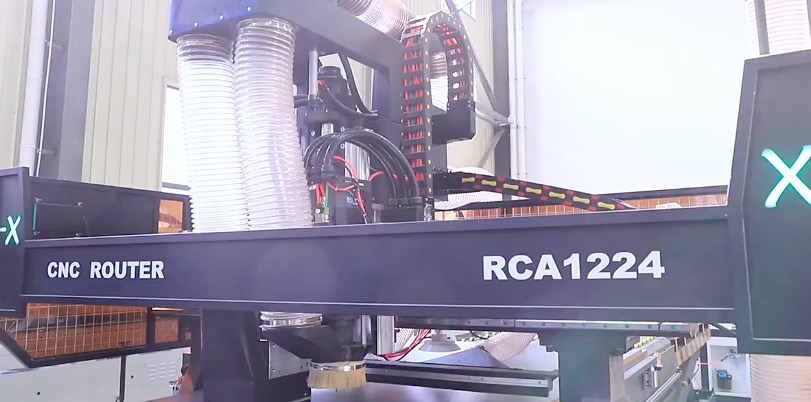
| Standard three-axis router | 1300 × 2500 × 200 | 3–6 kW | Manual loading, vacuum table | 3,000–20,000 | Advertising, doors, general cutting |
| ATC router (carousel/linear) | 1300 × 2500 × 250 | 9 kW (6–12 kW optional) | 8–24 tool magazine, auto tool change | 8,000–150,000 | Cabinet doors, wood molds, multi-process work |
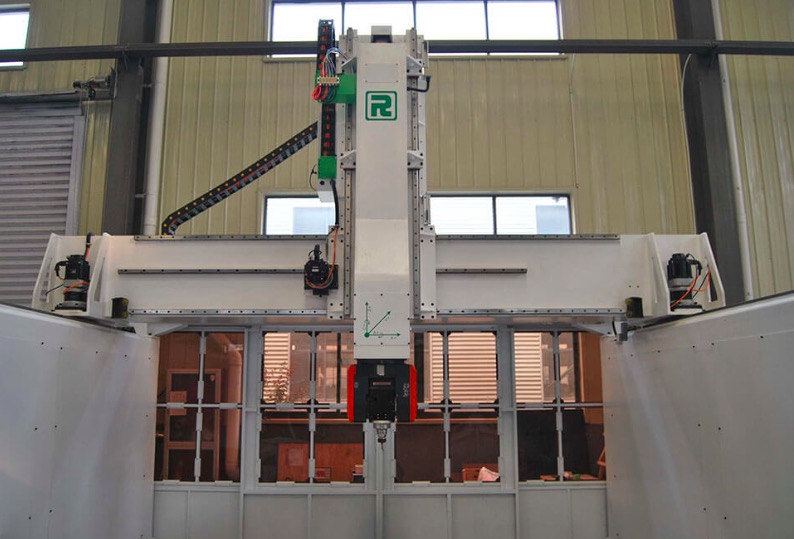
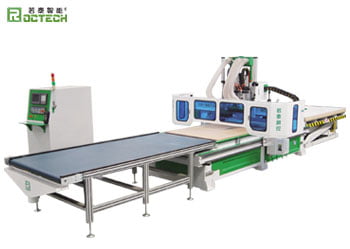
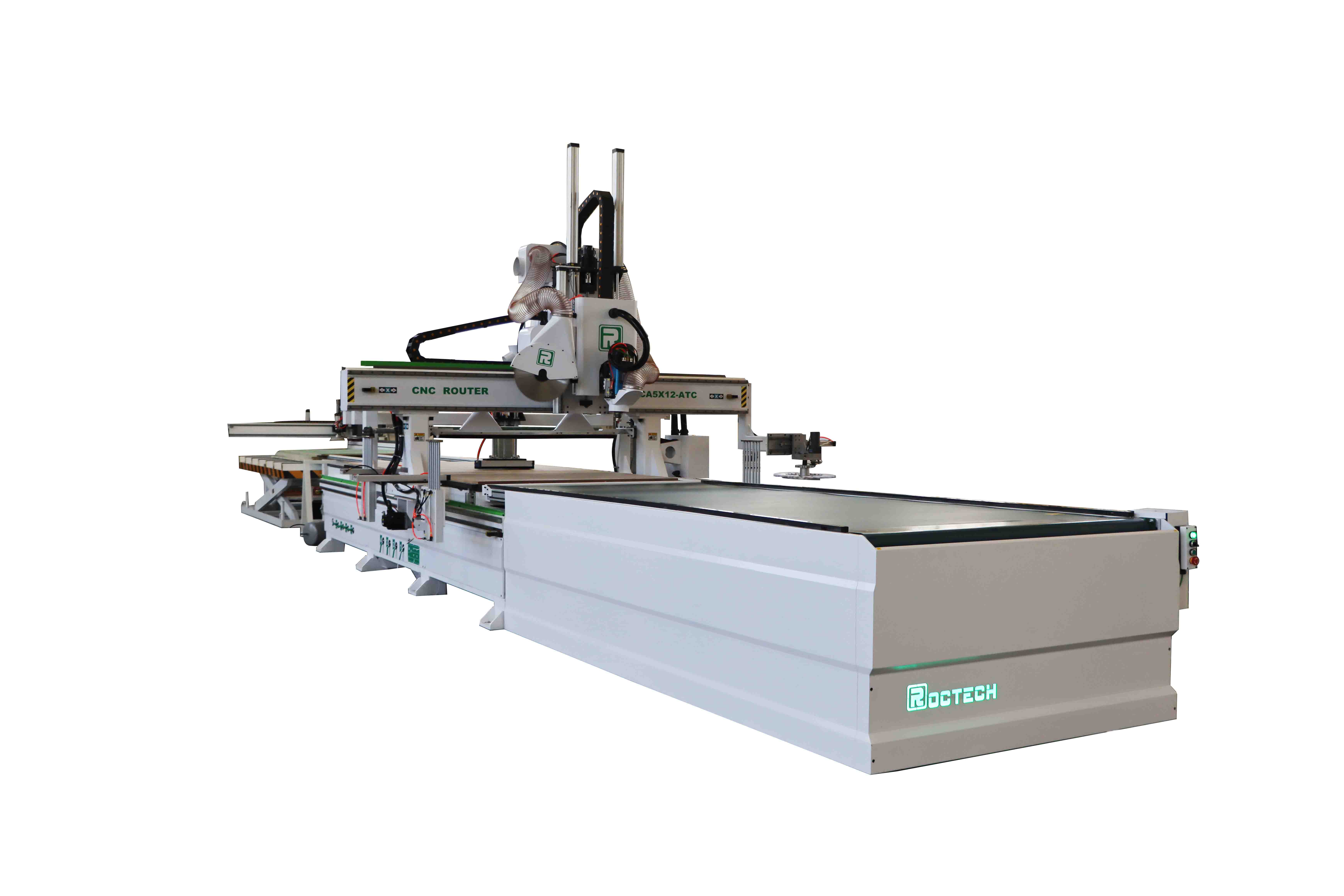
| Automatic nesting center | 1220 × 2440 × 150 | 9.6 kW (higher optional) | Auto load/unload, labeling, row drill, auto lubrication | 15,000–300,000 | Custom cabinets, wardrobes, batch panel cutting |
| Five-axis machining center | 1300 × 2500 (T-slot) | 10 kW+ | Five-axis simultaneous, imported CNC | 500,000–2,000,000 | Complex curved surfaces, molds, shaped furniture |
Two readings follow from this table. The first is that the price gap between an ATC router and a full nesting center is narrower than the gap between either and a five-axis machine — which means that for a shop whose bottleneck is material handling rather than geometry, the nesting center delivers the higher return per dollar invested. The second is that the nesting center is not defined by its spindle; a 9.6 kW unit is unremarkable in isolation. What defines it is the surrounding system: automatic loading of sheets, automatic unloading of finished parts, optional labeling for sheet identity tracking, and a row drill group that allows cutting, drilling, and grooving in a single setup. The economic case rests on labor reduction and sheet utilization, not on cutting speed.
2. Technology Application and Brand Case Study
The integration challenge is where suppliers differentiate. A nesting center is only as good as the coherence between its vacuum system, its drilling group, its control, and the nesting software upstream. Zone-controlled double-layer vacuum tables, for instance, are what allow both full-size sheets and small offcuts to be held reliably in the same shift — a detail that matters far more in practice than nominal traverse speed.
Roctech Machinery Co., Ltd., headquartered in Jinan, Shandong Province, illustrates how a supplier builds out this integration. The company's Master series (RCA1224, RCA1328, RCA1530 and related models) is representative of the current generation of Chinese-built nesting centers: heavy-duty welded beds, Taiwan HIWIN linear guides, Yaskawa servo drives, Syntec controls, and a 9.6 kW spindle with higher-power options. The RCA1224, with a 1220 × 2440 × 150 mm work envelope, maps directly onto the standard 4 × 8 ft sheet format that dominates cabinet production worldwide. More telling than the bill of materials is the functional package — automatic labeling, row drill integration for one-pass cutting and drilling, and timed automatic lubrication — which addresses the three failure modes that most often erode uptime in real shops: part misidentification, re-fixturing, and neglected maintenance.
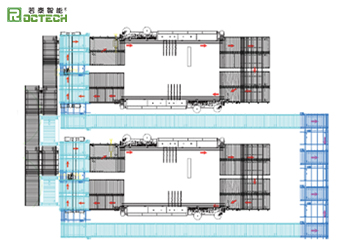
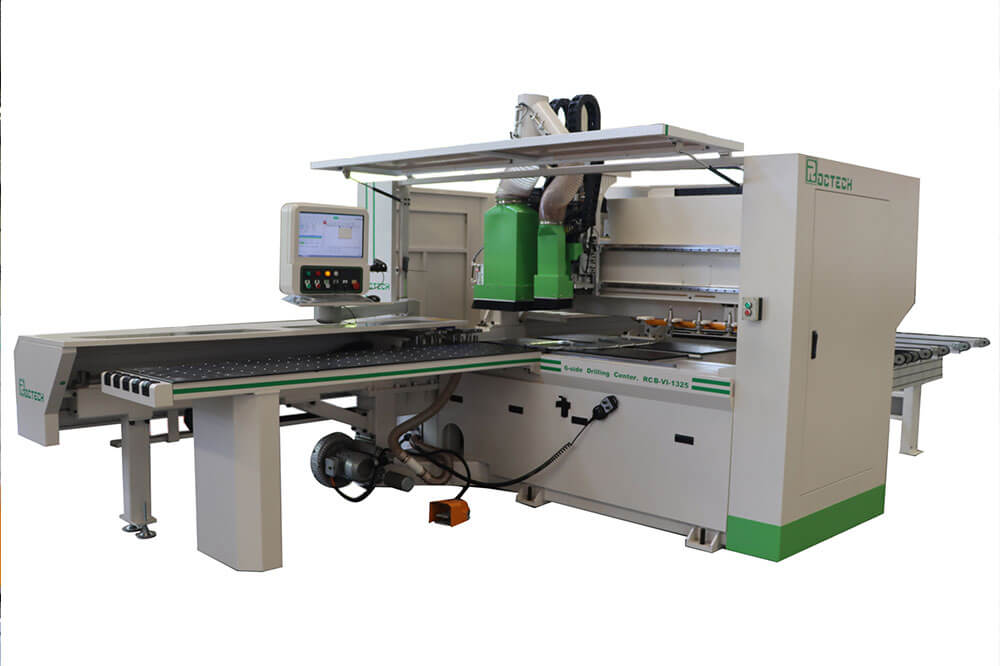
Roctech's broader product range is relevant to how buyers actually plan capacity. The same company supplies six-sided drilling centers that complete machining on all six faces of a panel in one clamping, edge banding machines covering semi-automatic through high-speed configurations, and ATC routers with 8–24 tool capacity. For a cabinet manufacturer, this means the nesting center, drill, and edge bander can be specified as a coordinated line rather than assembled from unrelated vendors — a meaningful advantage when the goal is data continuity from design software through to the drill's QR-code program recall. Roctech's certifications (ISO9001, CE, and FDA/UL for its laser line) and its export footprint across more than 100 countries are consistent with the profile of a supplier competing on system completeness rather than on individual machine price.
3. Conclusion and Outlook
The nesting center has become the reference point against which panel furniture equipment is now specified, and the competitive axis has moved from spindle power and traverse speed to integration depth: how well the machine ingests nesting data, how reliably it tracks parts, and how much of the shift it can run without an operator. The next phase will be defined by five-axis capability migrating down-market, by MES-level production management becoming standard rather than optional, and by predictive maintenance moving from marketing language into actual sensor-driven service contracts. For machine builders, the implication is that hardware specifications are increasingly a commodity; the durable advantage lies in the software layer and the service network behind it.
Looking for more information about our CNC machines and services? Contact us today.
Contact
Previous:The Woodworking Nesting CNC Router: Market Dynamics, Technology, and the Automation Leap
Next:Not






















The Nesting Center as the New Baseline: Automation and Integration in Panel Furniture Manufacturing - Roctech® have advanced technology for CNC Router,cnc router cabinets,Roctech already have 15 years experiences of cnc router technology.-© 2023 Roctech® Machinery Co.,Ltd. - All Rights Reserved Website Terms Of Use ● Privacy Policy ● Cookie Policy